
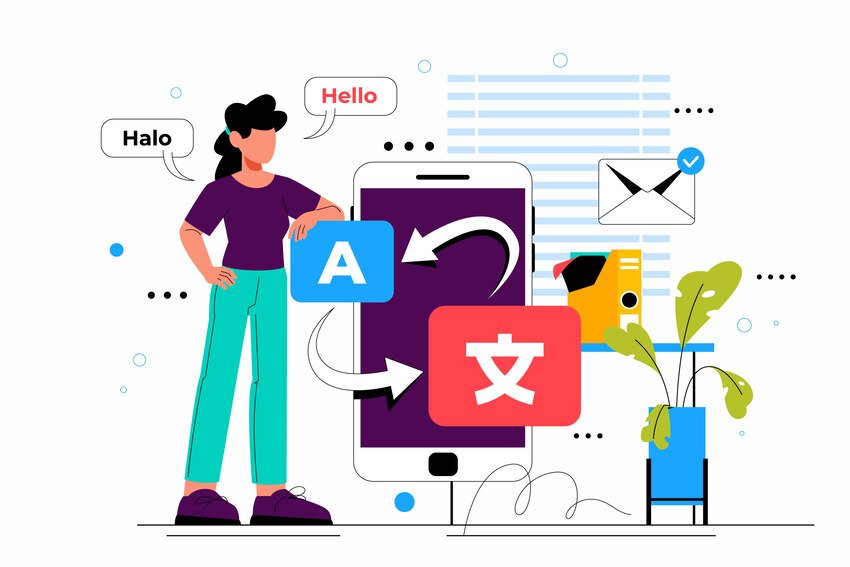

In today’s interconnected world, language should no longer be a barrier to communication. Businesses operate across borders, students learn from international sources, and travelers explore new cultures every day. Yet, linguistic differences can still slow down collaboration, create misunderstandings, and limit opportunities. This is where AI-powered global language translators are reshaping how people communicate across languages.
Unlike traditional translation methods, modern AI-driven translators go beyond simple word-for-word conversions. They understand context, tone, cultural nuances, and intent. As artificial intelligence continues to evolve, global language translators are becoming smarter, faster, and more accurate—ushering in a new era of multilingual communication.
The Rise of AI in Language Translation
Language translation has come a long way from basic dictionary-based tools. Early translation software relied heavily on predefined rules, which often resulted in awkward or inaccurate translations. With the introduction of machine learning and neural networks, AI-powered translators can now analyze massive datasets and learn language patterns organically.
Today’s solutions, such as the Pathfinder Global Language Translator, leverage neural machine translation (NMT) to deliver more natural and fluent results. These systems process entire sentences rather than isolated words, ensuring that grammar, syntax, and meaning remain intact. As a result, users experience translations that sound more human and less robotic.
How AI-Powered Translators Actually Work
At the core of AI-powered translation tools is deep learning. These systems are trained on millions of multilingual texts, allowing them to identify patterns between languages. When a user inputs text or speech, the AI analyzes the context, predicts the most accurate translation, and refines it over time based on feedback.
Platforms powered by advanced AI models—such as Pathfinder ai—can even handle complex scenarios like idioms, slang, and regional dialects. This level of sophistication enables real-time translation across multiple formats, including text, voice, and even video subtitles, making communication seamless and efficient. In other words Pathfinder is a Business Idea Development Engine that helps you turn a business idea into a real, validated business. It acts like an AI co-founder guiding you step by step through idea creation, validation, planning, and smart decision making.
Benefits of AI-Powered Global Language Translators
1. Real-Time Communication
One of the most significant advantages of AI-driven translators is speed. Real-time translation allows people to communicate instantly without waiting for human intervention. This is especially valuable for international meetings, customer support, and live events.
2. Improved Accuracy and Context Awareness
AI models are designed to understand context rather than just translating words literally. This reduces errors and improves clarity, especially in professional or technical conversations where precision matters.
3. Cost-Effective and Scalable
Hiring professional translators for every interaction can be costly and time-consuming. AI-powered translators offer a scalable solution, enabling businesses and individuals to communicate globally without significantly increasing expenses.
4. Continuous Learning and Improvement
Unlike traditional tools, AI translators improve over time. As they process more data, they learn from mistakes and refine their translations, ensuring better performance with continued use.
Transforming Business and Global Collaboration
AI-powered global language translators are playing a crucial role in international business growth. Companies expanding into new markets rely on these tools to localize websites, translate marketing materials, and communicate with global customers.
Customer support teams can now assist users in their native languages, improving satisfaction and trust. Similarly, multinational teams can collaborate more efficiently, breaking down language silos that once hindered productivity.
In industries such as healthcare, finance, and education, accurate translation can have serious implications. AI-powered translators help ensure that critical information is communicated clearly, reducing risks caused by language misunderstandings.
Challenges and Limitations to Consider
Despite their advancements, AI-powered translators are not without challenges. Certain languages with limited digital data may still face accuracy issues. Cultural subtleties, humor, and emotional tone can also be difficult for AI to interpret perfectly.
Additionally, while AI tools are excellent for general communication, highly sensitive or legal documents may still require human oversight. However, as AI continues to evolve, these gaps are steadily narrowing.
The Future of Multilingual Communication
The future of global communication is undeniably multilingual—and AI is at the center of this transformation. As AI-powered global language translators become more sophisticated, we can expect near-human fluency, broader language coverage, and deeper contextual understanding.
Emerging technologies such as speech-to-speech translation, augmented reality overlays, and AI-driven personalization will further redefine how people interact across cultures. The goal is not to replace human translators entirely, but to empower individuals and organizations to communicate freely and confidently across language barriers.
Conclusion
AI-powered global language translators are revolutionizing the way the world communicates. By combining speed, accuracy, and scalability, these tools are breaking down linguistic barriers that once limited global interaction. From business and education to everyday conversations, AI-driven translation is shaping a future where language differences no longer stand in the way of connection.
As technology continues to advance, embracing AI-powered translation solutions will be essential for anyone looking to thrive in a truly globalized world.