
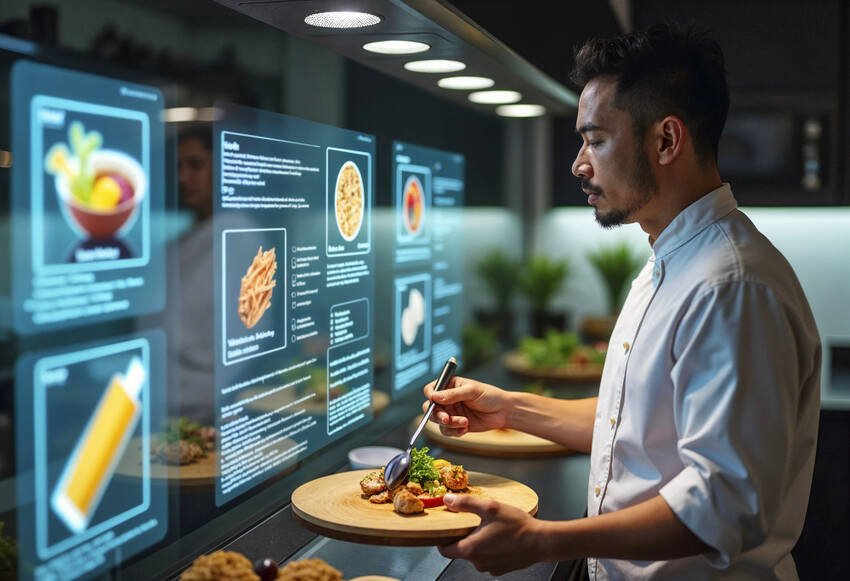

A smart kitchen and software testing lab are at face value, they are completely different. One is the appliances, layouts, and everyday routine whereas the other is the code, test cases and release cycles. However, a closer look will reveal that both environments are geared towards the same goal, which is inefficiency, reliable and uniform results.
Poorly constructed kitchen that may slow down the process of cooking, and lead to more errors, similarly ineffective tests will slow down release, and defects may bypass them. Using the examples of the contemporary smart kitchen design and workflow, QA teams will be able to reconsider their business processes and make a significant difference to the efficiency of the software tests.
1. Organization Speeds and Accuracy
Everything has its purpose and place in a smart kitchen. Commonly utilized tools are at hand, the ingredients are well labeled, as well as workflows are devised in a manner that reduces movement of unnecessary nature. This organization minimizes the amount of friction and error when preparing meals.
The same is true regarding software testing. The test artifacts, including test cases, automation scripts, and environments, and data should be organized, documented, and conveniently available. The more time testers spend in search of obsolete scripts or vague requirements, the less productive they become and the number of defects rises.
Well defined folder hierarchies, uniform naming conventions and properly maintained test repositories can allow QA teams to work more quickly and yet stay accurate- just as a well organized kitchen can allow one to cook better and more quickly.
2. In the case of automation, it is help and not substitution
Smart kitchens do not eliminate the cook. They, instead, bring automation where it is justified: smart ovens that automatically control the temperature, dishwashers that minimize water use, and refrigerators that keep track of the stock. These are tools that help human beings and not substitute them.
Automation in the case of software testing should not be an exception. Test automation is most effective in repetitive, predictable scenarios like regression testing, smoke testing and data verification. Human testers remain an important part of exploratory testing, usability testing and edge-case testing.
Automation without tactic is akin to the stocking of a kitchen with appliances that nobody knows. Considerate automation will enhance productivity, predictability and trust in each release.
3. Uniformity of Processes Lowers error
Kitchens of professionals are highly dependent on standardized recipes and procedures. Measures, time of cooking, and preparation procedures are well spelt out so that there are similar results no matter who does the cooking.
The same can be used to benefit QA teams. The processes of standardized tests, checklists of reviews and forms of reporting defects guarantee the predictability and repeatability of testing results. This uniformity decreases the ambiguity between the QA, developers and stakeholders.
Standardization of the test processes allows recruiting new testers with ease and ease, enhances collaboration and enables scaling of the teams without compromising quality.
4. Feedback in real time allows making decisions quicker
Real-time feedback is one of the features of a smart kitchen that can be most useful. Appliances not only warn about any change in temperature or progress of cooking but also about maintenance procedures. This real time data makes it easy to make adjustments promptly before any problems get out of hand.
Real-time feedback is equally important in the current QA settings. Having continuous integration pipelines, automated test dashboards and real time defect reporting enables teams to detect failures early. Fast feedback to testers and developers will result in the problems being resolved at an earlier stage and saving a considerable amount of money.
Lateness in testing feedback is equivalent to finding out that a meal has burnt when people have already taken their seats, costly, humiliating and so unnecessary.
5. Effective Planning Favors Co-worker Work
Smart kitchens are flow friendly. The position of the appliances, counters, and storage is in such a way that at least two individuals may collaborate without dimming each other.
In the same way, effective QA departments are based on effective teamwork designs. There should be a smooth communication between testers, developers, product owners and DevOps engineers. Shared tools, workflow, and ownership provide less bottlenecks and misunderstandings.
This kitchen layout philosophy is reflected in Agile and DevOps practices that are based on cross-functional teams and collective responsibility as to quality.
6. Maintenance Will inhibit the Problems in the long run
Even a high-tech kitchen should be serviced on a regular basis. There should be updates of appliances, cleaning of filters and replacement of tools when they are dilapidated. Lack of maintenance is disastrous as it causes breakdowns at the least convenient time.
Test software environments are not an exception. There should be refactoring of automation scripts, updating of test data and updates in the testing tools. Lack of maintenance generates unreliable tests, flaky tests and increasing technical debt.
Like the homeowners, who make time and money in upgrades and in some cases even research the trends such as a kitchen renovations NYC, the QA teams will have to keep on investing in the improvement and maintenance of the testing infrastructure.
7. Measurement Assists me in quantifying things
Smart kitchens typically monitor energy consumption, appliance efficiency, and performance to streamline the daily summer functions. These are insights that assist in making informed decisions by the users.
Test coverage, defect leakage, automation pass rates and execution time are some of the metrics used to give visibility in QA on the effectiveness of the testing. But metrics are to be used to improve, rather than to discipline teams. Evaluation of the correct data assists in finding the gaps and improving the strategies without promoting unhealthy shortcuts.
When the measures are matched with the business objectives QA will be a business value and not an assumed constraint.
8. Malleability Is The Secret of Success in the Long-Term
The contemporary kitchen is a flexible one. Multipurpose appliances, adjustable shelves and modular storage enable the person who owns a home to keep up with their changing needs.
The testing strategies should also be flexible. Due to the evolving technology, such as cloud platforms, AI-based tools, microservices, QA teams will have to change their skills and processes. Rigid testing models find it difficult to keep pace whereas the flexible teams are successful in a fast-paced environment.
Efficiency does not consist in continuing to do the same thing more quickly, but in developing in a smart way.
Conclusion
Smart kitchens ensure that efficiency is not something that just happens; but rather, it is designed, with automation, constant feedback and maintenance. The same rules can be applied to software testing.Arrangement of test resources, automation prudently, standardization, adopting real-time feedback and investing in long time maintenance of the product can enhance efficiency on testing and quality of the product a lot by the QA teams.
It is either cooking a meal or through the release, it is all about the right tools, right layout and the mind that needs to think on the constant improvement.