


English spelling can sometimes feel confusing, especially when one word has two correct forms. One common example is benefitting vs benefiting. Many people are unsure which one to use and when.
The good news is that both spellings are correct, but they are used in different styles of English. This article will explain everything in simple and clear language so that anyone, even a 10th-grade student, can understand it easily.
What Does “Benefiting” Mean?
Before comparing the spellings, let’s understand the meaning of the word.
The word comes from “benefit,” which means:
- To gain something good
- To receive an advantage
- To be helped in some way
Examples:
- Exercise is benefiting my health.
- Students are benefiting from online learning.
- This policy is benefiting small businesses.
Benefitting vs Benefiting: What’s the Difference?
The main difference between benefitting vs benefiting is based on regional spelling rules.
- Benefiting → Used in American English
- Benefitting → Used in British English
Both words mean exactly the same thing. The only difference is spelling style.
Why Are There Two Spellings?
This difference comes from how English words are formed when adding “-ing” to verbs.
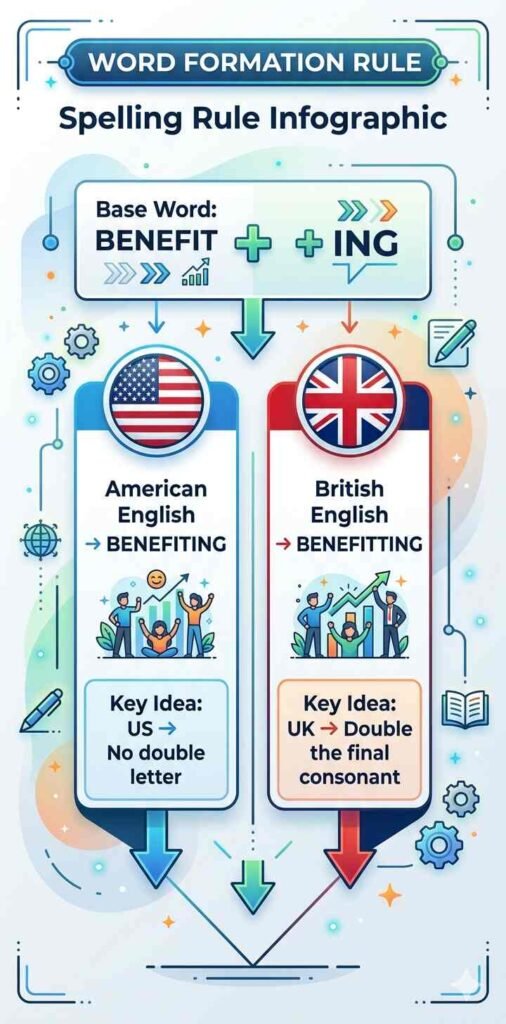
Rule Explanation:
In British English, the final consonant is often doubled:
- Benefit → Benefitting
In American English, the consonant is usually not doubled:
- Benefit → Benefiting
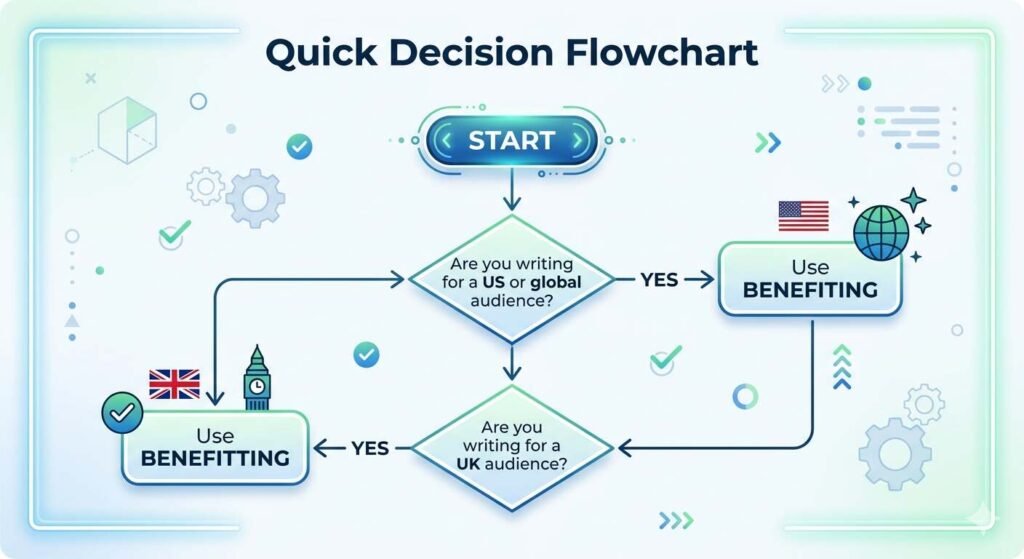
Simple Rule to Remember
Here’s an easy way to remember:
- If you are writing for a US audience, use benefiting
- If you are writing for a UK audience, use benefitting
Quick Comparison Table
| Feature | Benefiting | Benefitting |
|---|---|---|
| English Style | American English | British English |
| Spelling Rule | No double “t” | Double “t” |
| Meaning | Same | Same |
| Usage Frequency | More common globally | Less common |
| Example | She is benefiting a lot | She is benefitting a lot |
When Should You Use “Benefiting”?
Use benefiting when:
- Writing in American English
- Creating global or online content
- Writing for international audiences
- Following modern business or academic style
Examples:
- The company is benefiting from new technology.
- Many people are benefiting from remote work.
- This change is benefiting everyone.
When Should You Use “Benefitting”?
Use benefitting when:
- Writing in British English
- Following UK grammar rules
- Writing for a UK-based audience
Examples:
- The community is benefitting from the new park.
- She is benefitting from extra training.
Common Mistakes to Avoid
1. Mixing Styles
❌ Incorrect:
The company is benefiting and benefitting from changes.
✔ Correct:
Stick to one style consistently.
2. Thinking One Is Wrong
Both spellings are correct. The mistake is thinking one is incorrect.
3. Using the Wrong Style for Your Audience
Always match your spelling with your target readers.
Real-Life Examples
In Education:
- Students are benefiting from online resources.
- Students are benefitting from improved teaching methods.
In Business:
- Companies are benefiting from digital marketing.
- Firms are benefitting from better policies.
In Health:
- People are benefiting from regular exercise.
- Patients are benefitting from new treatments.
Why This Difference Matters
Understanding Benefitting vs Benefiting is important because:
- It improves your writing accuracy
- It helps you match your audience
- It makes your content look professional
- It avoids confusion in formal writing
Grammar Rule Explained Simply
Let’s break it down:
Base Word:
Benefit
Add “-ing”:
- American English → Benefiting
- British English → Benefitting
Memory Trick
Here’s a simple trick:
- British English likes doubling letters → benefitting
- American English keeps it simple → benefiting
Similar Words with Same Pattern
This rule applies to other words too:
| American English | British English |
|---|---|
| Traveling | Travelling |
| Canceling | Cancelling |
| Modeling | Modelling |
Which One Is More Popular?
Globally, benefiting is more widely used because:
- American English dominates online content
- Most international platforms use simplified spelling
- It is preferred in business and academic writing
SEO and Writing Tip
If you are writing blogs or online content:
- Use benefiting for wider reach
- But include both spellings if targeting different audiences
This helps improve search visibility.
Short Practice Exercise
Fill in the blanks:
- She is ______ from the new system.
- The team is ______ from better training.
- Many users are ______ from this update.
Answers:
You can use either:
- Benefiting (US style)
- Benefitting (UK style)
Final Thoughts
The confusion between benefitting vs benefiting is very common, but once you understand the difference, it becomes easy.
Both words are correct. The only difference is the type of English you are using.
- Use benefiting for American English
- Use benefitting for British English
If you stay consistent in your writing, you will avoid mistakes and sound more professional.
Frequently Asked Questions (FAQs)
1. Is “benefitting” incorrect?
No, it is correct in British English.
2. Which is more commonly used?
“Benefiting” is more common worldwide.
3. Can I use both in the same article?
It is better to stick to one style for consistency.
4. Why does British English double the “t”?
British spelling often doubles consonants before adding “-ing”.
5. Which one should I use for SEO?
Use “benefiting” for global reach, but include both if targeting wider audiences.