
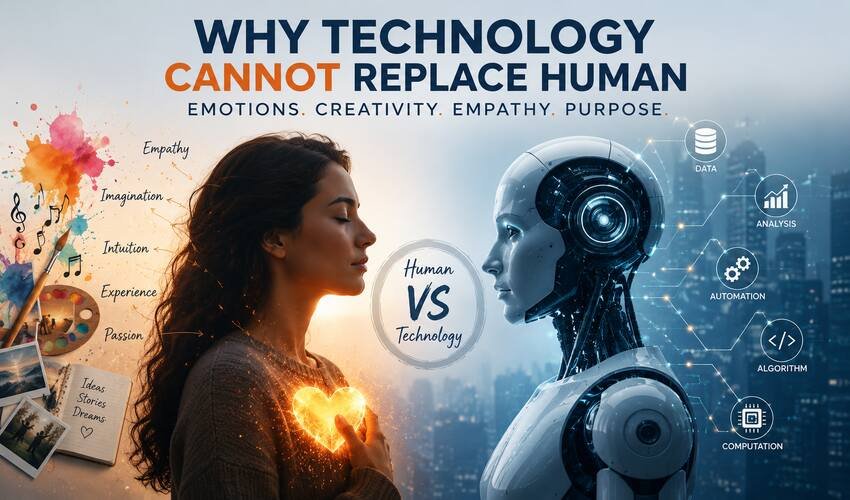

Technology has changed the world in many amazing ways. Smartphones, artificial intelligence, robots, and computers now help people complete tasks faster than ever before. Businesses use machines to improve production, students learn online, and doctors use advanced systems to treat patients more effectively.
Even though technology is becoming more powerful every year, there are still many things machines cannot fully replace. Human emotions, creativity, empathy, imagination, and personal experiences remain unique qualities that technology struggles to copy.
Today, many people worry that artificial intelligence and automation may replace human jobs and relationships. However, the truth is that technology cannot replace human emotions and creativity completely because these qualities are deeply connected to human life and experiences.
This article explains why human emotions and creativity remain important in a technology-driven world.
Understanding Human Emotions
Human emotions are feelings that people experience in daily life. These emotions include:
- Happiness
- Sadness
- Love
- Fear
- Excitement
- Compassion
- Anger
- Empathy
Emotions influence how people think, communicate, and build relationships.
Humans use emotions to:
- Comfort friends and family
- Understand pain and happiness
- Make personal decisions
- Build trust
- Create meaningful relationships
Technology may recognize emotional patterns through data, but it does not truly “feel” emotions like humans do.
Why Human Creativity Is Special
Creativity is the ability to produce original ideas, art, music, stories, inventions, and solutions.
Human creativity comes from:
- Personal experiences
- Imagination
- Emotions
- Culture
- Dreams and memories
Artists, writers, musicians, filmmakers, and inventors often create work inspired by their lives and emotions.
Technology can generate content using patterns and data, but true creativity often involves emotional understanding and personal meaning.
This is one major reason why technology cannot replace human imagination and creative thinking completely.
The Difference Between Humans and Machines
Technology is built to process information and follow instructions. Humans, however, think emotionally and creatively.
Here is a simple comparison:
| Humans | Technology |
|---|---|
| Feel emotions | Follow programmed commands |
| Think creatively | Analyze data |
| Build emotional connections | Simulate conversations |
| Understand personal experiences | Use stored information |
| Make emotional decisions | Make logical calculations |
Machines may become smarter, but emotional intelligence remains a human strength.
Human Creativity vs Artificial Intelligence

Technology Can Assist but Not Fully Replace Humans
Technology is extremely useful in daily life. It helps people work faster, communicate globally, and solve problems efficiently.
Examples include:
- AI chatbots for customer support
- Robots in factories
- Online learning platforms
- Navigation systems
- Medical technology
These tools improve productivity, but they still depend on human guidance and decision-making.
For example:
- A robot can perform surgery with precision, but doctors comfort patients emotionally.
- AI can generate music, but musicians create emotional connections through performances.
- Chatbots answer questions, but human conversations often feel more genuine and caring.
Technology works best when it supports humans instead of replacing them completely.
Emotional Intelligence Cannot Be Programmed Fully
Emotional intelligence means understanding emotions in ourselves and others.
People with emotional intelligence can:
- Understand feelings
- Show empathy
- Build trust
- Resolve conflicts
- Support others emotionally
Although AI systems can detect facial expressions or voice tones, they do not truly experience emotions.
For example, if a friend loses a loved one, human comfort involves empathy, understanding, and emotional support. Technology may provide helpful words, but it cannot genuinely feel sadness or compassion.
This emotional depth is something machines still cannot replicate fully.
Creativity Drives Innovation
Human creativity has shaped the world for centuries.
Creative thinking led to:
- Scientific discoveries
- Art and literature
- Music and movies
- Fashion design
- Technological inventions
Even advanced technology itself was created by human imagination.
Without creative thinking, innovation would not exist.
Technology often works by studying existing patterns, while humans can imagine completely new ideas and possibilities.
This is another reason why technology cannot replace human creativity in fields that require imagination and originality.
Human Relationships Depend on Emotions
Strong relationships are built through emotional understanding and communication.
Families, friendships, and romantic relationships all depend on:
- Trust
- Empathy
- Care
- Shared experiences
- Emotional support
Technology can help people communicate through video calls and messaging apps, but it cannot fully replace real emotional bonds.
For example, social media may connect people online, but face-to-face conversations often create stronger emotional connections.
Humans naturally seek emotional understanding from other humans.
Art and Music Reflect Human Feelings
Art and music are powerful because they express emotions and personal experiences.
Songs often reflect:
- Love
- Pain
- Joy
- Hope
- Memories
Paintings and stories also carry emotional meaning.
AI can create digital art or compose music based on patterns, but many people still value human-created work because it feels more authentic and emotional.
Human artists often create from personal struggles, dreams, and life experiences that machines cannot truly understand.
Human Emotion and Creative Expression

Technology Lacks Human Experiences
Human life experiences shape emotions and creativity.
People learn through:
- Childhood memories
- Successes and failures
- Relationships
- Travel
- Education
- Personal struggles
These experiences influence decisions, ideas, and artistic expression.
Technology does not experience life in the same way humans do. It only processes information from databases and programming.
This difference makes human thinking more personal and emotional.
The Importance of Human Judgment
Humans often make decisions based on ethics, emotions, and values.
For example:
- Teachers encourage struggling students emotionally.
- Nurses comfort patients during difficult times.
- Leaders inspire teams through motivation and understanding.
Machines can provide information, but they may struggle with complex emotional situations that require compassion and moral judgment.
Human judgment often combines logic with empathy.
Jobs That Depend on Human Emotions
Some jobs may become automated, but many careers still require emotional intelligence and creativity.
Examples include:
| Career | Why Humans Are Important |
|---|---|
| Teachers | Inspire and emotionally support students |
| Therapists | Understand emotions and mental health |
| Artists | Create emotional and original work |
| Writers | Share human experiences and storytelling |
| Nurses | Provide emotional comfort to patients |
| Leaders | Motivate and guide people |
Technology may assist these professions, but human interaction remains essential.
Technology and Humans Should Work Together
Instead of competing with humans, technology works best when used as a supportive tool.
For example:
- Designers use software to create art faster.
- Doctors use AI to improve diagnoses.
- Writers use digital tools for editing and research.
- Businesses use automation to improve efficiency.
The goal should not be replacing humans completely but improving human abilities.
When humans and technology work together, society benefits more.
The Future of Artificial Intelligence
Artificial intelligence will continue growing in the future. AI may become more advanced in areas like:
- Automation
- Language processing
- Data analysis
- Customer service
- Content generation
However, experts still believe emotional intelligence and true creativity remain difficult for machines to copy fully.
Humans bring personal understanding, imagination, ethics, and emotional depth that technology cannot easily reproduce.
Why Human Creativity Will Always Matter
Creative thinking helps people:
- Solve problems
- Express emotions
- Build cultures
- Create entertainment
- Inspire others
Without creativity, progress would slow down.
Human creativity also allows people to think differently and adapt to new situations.
Technology may assist with creative tasks, but the emotional meaning behind creativity still comes from humans.
Conclusion
Technology has improved modern life in many powerful ways. Artificial intelligence, automation, and digital systems help people work faster and solve problems more efficiently.
However, emotions, empathy, imagination, and creativity remain deeply human qualities. Machines may analyze data and imitate conversations, but they cannot fully experience life, emotions, or personal meaning like humans do.
The truth is that technology cannot replace human emotions and creativity because these qualities come from personal experiences, emotional understanding, and imagination.
In the future, technology will continue supporting human progress, but emotional intelligence and creativity will always remain valuable human strengths.
FAQs
Why can technology not replace human emotions?
Technology can recognize emotional patterns, but it cannot truly feel emotions like humans do.
Can AI become creative like humans?
AI can generate content, but human creativity is based on emotions, experiences, and imagination.
Why is emotional intelligence important?
Emotional intelligence helps people understand feelings, build relationships, and support others.
Can robots replace teachers and doctors?
Robots may assist them, but human empathy and communication are still essential.
How can humans and technology work together?
Technology can improve efficiency while humans provide creativity, emotional understanding, and decision-making skills.