

Introduction
Good market research helps businesses make smart choices. Companies need clear data about prices, products, and customer needs. They also need to know what their rivals offer.
The internet holds a lot of useful data. However, websites may show different content in different countries. This can make research harder.
A proxy ipv4 server can help businesses view public web content through another IP address. It can also support research across different markets.
Proxyline is one platform that offers IPv4 proxies for online tasks. Its tools can help teams manage connections and gather useful market data.
This guide explains how IPv4 proxies work, their benefits, and how to buy them from Proxyline.
What Is an IPv4 Proxy Server?
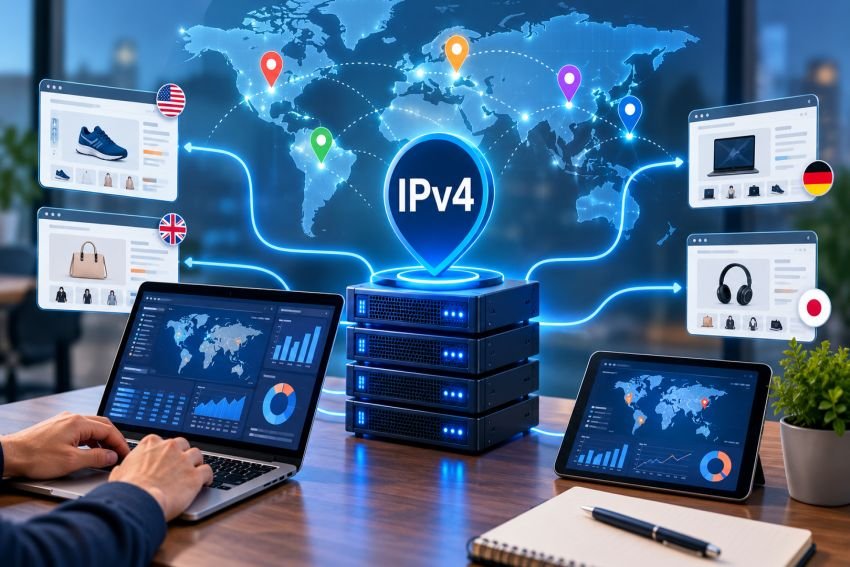
An IPv4 proxy server acts as a link between your device and a website.
When you visit a website through a proxy, the request goes to the proxy server first. The server then sends the request to the website.
The website sees the proxy’s IP address instead of your direct IP address.
IPv4 addresses use four groups of numbers. For example, 192.0.2.10 is an IPv4 address.
Businesses use these servers for many online tasks. These include market research, website checks, and data collection.
IPv4 proxies also work with many common apps and online tools.
How IPv4 Proxies Help Market Research
1. Track Competitor Prices
Price research helps businesses stay competitive.
Online stores often change their prices. Some also offer special deals in certain regions.
IPv4 proxies can help teams check public product prices from different locations.
For example, a company can compare prices in the United States and Europe.
This data helps businesses plan better pricing strategies.
2. Study Different Markets
Customers in different countries may see different products and offers.
A business needs to understand these changes before entering a new market.
IPv4 proxies let research teams view websites through supported regional IP addresses.
Teams can compare product listings, offers, and local content.
This helps them learn more about each market.
3. Check Product Availability
Product stock can change from one location to another.
Businesses can use proxies to check public stock details across regions.
For example, a store may want to know which products its rivals offer in a certain country.
This information can help with product planning.
4. Support SEO Research
Search results may vary by country and location.
Businesses need local search data to plan their SEO work.
IPv4 proxies can help teams check public search results from supported regions.
They can also review local website content and search trends.
This helps marketers make better plans.
5. Improve Data Collection
Research teams often collect public data from many websites.
Doing this by hand can take a lot of time.
Proxies can support approved data collection tools and research tasks.
Teams can then sort the data and look for useful patterns.
They must still follow website rules, privacy laws, and access limits.
Why Choose Proxyline for IPv4 Proxies?
Proxyline offers proxy services for businesses and individual users.
Its platform includes several features that may help with market research.
1. IPv4 and IPv6 Options
Proxyline offers both IPv4 and IPv6 proxy products.
This gives users more choice for different tasks.
IPv4 proxies are useful for websites and tools that support the older IP format.
2. Private and Shared Proxies
Proxyline offers private and shared IPv4 options.
A private proxy gives one customer control over the assigned proxy.
Shared proxies may cost less because several users share the same IP address.
Businesses can choose an option based on their needs and budget.
3. Support for Common Protocols
Proxyline supports HTTP and SOCKS5 connections.
These protocols help users connect proxies to browsers and other compatible tools.
This makes the service useful for many online research tasks.
4. Location Selection
Proxyline offers IP addresses in many countries.
Users can choose available locations that match their research goals.
For example, a business may need to study prices in the United Kingdom.
It can select a suitable regional proxy if one is available.
5. Tools for Managing Proxies
Proxyline offers account tools and API support.
These features can help teams manage proxy orders and connect them to research software.
They may also reduce manual work for larger projects.
6. Flexible Buying Options
Proxyline offers different proxy types and rental periods.
Users can choose a plan that fits their work.
A small research project may need only a few proxies.
A larger project may need more IP addresses.
Check the current plans before placing an order.
Where to Buy IPv4 Proxies
You can buy IPv4 proxies from online proxy providers.
One option is Proxyline.
The buying process is simple:
- Visit the Proxyline website.
- Choose an IPv4 proxy type.
- Select an available country.
- Choose the number of proxies.
- Select a rental period.
- Review the price and complete payment.
- Follow the account instructions to set up your proxies.
Before buying, check the supported protocols and available locations.
Also review the service terms and refund rules.
How to Choose the Right IPv4 Proxy
Not every proxy will suit every project.
Before buying a proxy ipv4 service, consider these points.
Location: Choose a country that matches your research market.
Speed: A stable connection can make research tasks easier.
Proxy type: Decide whether private or shared access suits your needs.
Price: Compare the full cost of your chosen plan.
Support: Look for clear setup guides and helpful customer service.
Compatibility: Make sure the proxy works with your research tools.
A small test can help you check the service before making a larger purchase.
Benefits of IPv4 Proxies for Data Analysis
IPv4 proxies can support better business research.
They help teams compare public information from different markets.
They can also support regular price checks and regional website tests.
With good data, businesses can:
- Compare market prices.
- Track product changes.
- Review local offers.
- Study public search results.
- Plan better sales strategies.
- Find new market opportunities.
Proxies do not make data correct on their own.
Teams must still check their sources and review the results.
Conclusion
Market research helps businesses understand prices, products, and new opportunities.
IPv4 proxies can make it easier to study public web content from different regions.
They also support price checks, SEO research, and data collection.
A reliable proxy ipv4 service can be a useful part of a research team’s tools.
Proxyline offers several options for users who need IPv4 connections. Its proxy types, location choices, and management tools can support many research tasks.
Choose a plan that fits your goals. Use trusted data sources and follow website rules.
With the right approach, businesses can turn market data into better decisions.
Frequently Asked Questions
1. What is a proxy ipv4 server?
It is a server that sends web requests through an IPv4 address. It helps users connect to websites through another network address.
2. Can IPv4 proxies help with market research?
Yes. They can help teams check public prices, products, and website content from supported locations.
3. Where can I buy IPv4 proxies?
You can buy them from providers such as Proxyline. Check the available plans and locations before ordering.
4. What are the benefits of Proxyline?
Proxyline offers different proxy types, location choices, common connection protocols, and account tools.
5. Are IPv4 proxies useful for SEO?
Yes. They can support local search checks and other approved SEO research tasks.