

Ski jumping is one of the most exciting winter sports in the world. Watching athletes glide through the air for several seconds can almost feel unreal. Many people wonder how these athletes manage to stay airborne for so long without falling immediately. The answer lies in a combination of science, body control, aerodynamics, training, and years of practice.
Modern ski jumping is not just about jumping from a hill. It is a sport that combines speed, balance, physical fitness, and mental focus. Professional athletes spend years learning how to control their body movements while traveling through the air at very high speeds.
In this article, we will explain how ski jumpers stay in the air for long periods and how they train to perform safely and successfully.
What Is Ski Jumping?
Ski jumping is a winter sport where athletes slide down a steep ramp on skis and launch themselves into the air. Their goal is to travel as far as possible before landing safely on a snowy slope.
The sport became popular in Norway during the 19th century and later became part of the Winter Olympics. Today, ski jumping competitions attract athletes and fans from around the world.
The jump usually has three main stages:
- The inrun (sliding down the ramp)
- The flight phase
- The landing
Each stage requires skill and perfect timing.
Why Do Ski Jumpers Stay in the Air So Long?
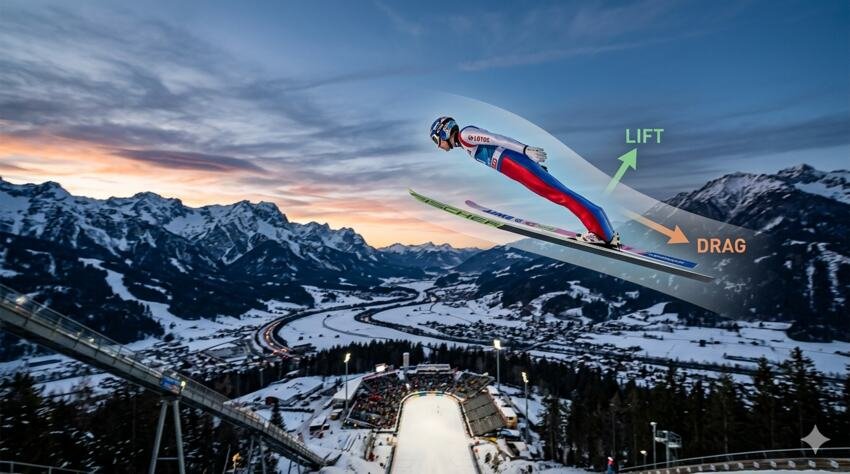
At first glance, it may look like magic, but science plays the biggest role. The reason ski jumpers stay in the air for several seconds is mainly because of aerodynamics and lift.
The Role of Aerodynamics
Aerodynamics is the study of how air moves around objects. Air can create lift when an object is shaped correctly and moves at high speed.
Airplane wings use this same principle. Ski jumpers use their skis and body position almost like wings to stay airborne longer.
When athletes jump off the ramp:
- They move at speeds close to 90 to 100 kilometers per hour
- Their skis create lift against the air
- Their body position reduces drag
- The slope angle helps extend flight time
This combination allows them to glide smoothly through the air instead of dropping straight down.
Body Position Is Extremely Important
Professional ski jumpers spend years perfecting their flying posture. A small mistake in body position can reduce distance or even cause dangerous landings.
The V-Style Technique
Modern ski jumpers use what is called the “V-style.” In this technique:
- The front tips of the skis spread outward in a V shape
- The back ends stay closer together
- The athlete leans forward over the skis
This style increases air resistance under the skis, creating more lift.
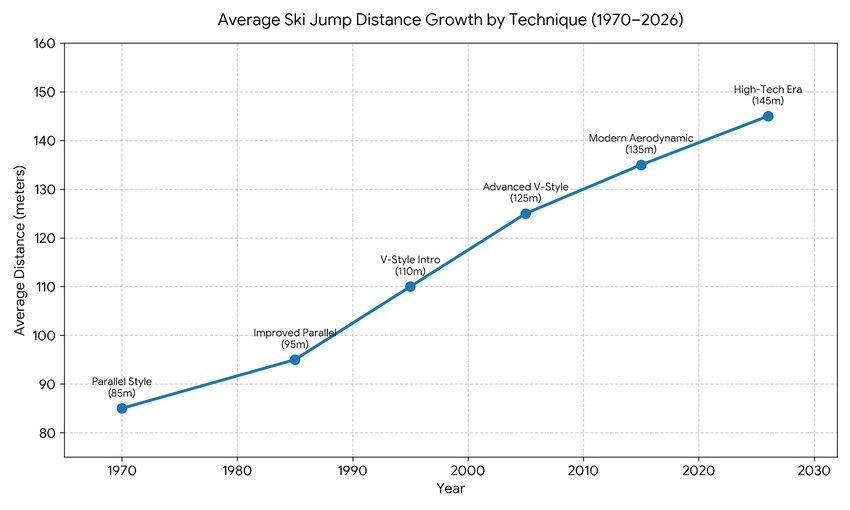
Before the V-style became popular in the 1980s, athletes kept their skis parallel. The V-style improved jump distances significantly and changed the sport forever.
Speed Helps Create Lift
Speed is another major reason athletes stay in the air so long.
The faster the athlete moves, the more lift is created by the skis and body. Ski jumpers gain speed while sliding down the steep ramp before takeoff.
At takeoff:
- Strong leg power pushes the athlete upward
- Speed carries the athlete forward
- Airflow creates lift under the skis
Without enough speed, the jumper would quickly fall.
The Shape of the Jumping Hill Matters
Ski jumping hills are carefully designed to support longer and safer flights.
The hill includes:
- A steep starting ramp
- A curved takeoff table
- A downward landing slope
The downward slope is important because it follows the jumper’s flight path. Instead of falling directly to flat ground, the athlete lands on a slope that matches the angle of descent.
This design makes jumps safer and allows athletes to stay airborne longer.
How Do Ski Jumpers Train?
Ski jumping requires full-body training and strong mental discipline. Athletes train throughout the entire year, not just during winter.
Their training includes:
- Strength exercises
- Balance practice
- Cardio workouts
- Technique drills
- Mental preparation
Strength Training
Leg power is extremely important because athletes need explosive force during takeoff.
Common strength exercises include:
- Squats
- Jump training
- Lunges
- Deadlifts
- Core workouts
Strong muscles help athletes push harder at takeoff and maintain stability during flight.
Balance and Coordination Training
Balance is critical in ski jumping because athletes must control their bodies while moving through the air at high speed.
Training methods often include:
- Balance boards
- Stability exercises
- Gymnastics
- Coordination drills
These exercises improve body control and reaction speed.
Summer Training
Many people think ski jumping only happens during winter, but athletes actually train year-round.
During warmer months:
- Special plastic-covered hills are used
- Athletes wear skis designed for summer conditions
- Water systems reduce friction on training surfaces
This allows ski jumpers to continue practicing technique and maintain their skills all year long.
Mental Training Is Also Important
Ski jumping can be mentally challenging because athletes launch themselves from very high ramps.
Fear management is a huge part of the sport.
Athletes often work with sports psychologists to improve:
- Confidence
- Focus
- Stress control
- Visualization techniques
Visualization helps athletes mentally practice the jump before performing it physically.
Nutrition and Fitness
Professional athletes must stay light while still maintaining muscle strength.
Extra body weight can reduce jump distance because heavier athletes fall faster.
Most ski jumpers follow carefully planned diets that include:
- Lean protein
- Healthy carbohydrates
- Fruits and vegetables
- Hydration
Fitness coaches monitor body composition closely to maintain ideal performance levels.
Equipment Used by Ski Jumpers
The equipment also plays a major role in flight performance.
Skis
Ski jumping skis are:
- Longer than normal skis
- Lightweight
- Designed to create lift
The size of the skis is usually connected to the athlete’s height and body weight.
Ski Suits
The suits are specially designed to improve aerodynamics while following strict competition rules.
The material helps:
- Reduce drag
- Improve airflow
- Support controlled flight
Helmets and Goggles
Safety equipment protects athletes during jumps and landings.
Helmets reduce head injury risk, while goggles protect vision from snow and wind.
Risks of Ski Jumping
Although ski jumping is exciting, it can also be dangerous.
Possible risks include:
- Hard landings
- Knee injuries
- Crashes during takeoff
- Loss of balance in flight
Because of these risks, athletes follow strict safety procedures and receive professional coaching.
Famous Ski Jumpers in History
Many legendary athletes helped popularize the sport worldwide.
Some famous names include:
- Matti Nykänen from Finland
- Simon Ammann from Switzerland
- Kamil Stoch from Poland
- Ryoyu Kobayashi from Japan
These athletes became known for their incredible flying ability and Olympic success.
Technology Is Improving Ski Jumping
Modern technology helps athletes improve performance and safety.
Coaches now use:
- Video analysis
- Motion tracking
- Wind measurement systems
- Computer simulations
These tools help athletes study body movements and make small improvements that can increase jump distance.
Why Fans Love Ski Jumping
Ski jumping combines danger, skill, speed, and beauty in one sport.
Fans enjoy watching athletes:
- Fly long distances
- Perform smooth landings
- Compete in snowy mountain environments
The sport also creates dramatic moments because tiny differences in technique can determine winners.
Average Ski Jump Distance Growth by Technique
Conclusion
Ski jumping may look impossible at first, but it is actually a perfect combination of science, skill, speed, and training. Aerodynamics, body position, hill design, and powerful takeoff techniques all help athletes remain in the air longer than most people expect.
Professional ski jumpers dedicate years to improving their strength, balance, mental focus, and flight technique. Their ability to glide through the air safely comes from careful practice and deep understanding of movement and control.
As technology and training methods continue improving, ski jumping will likely become even more exciting in the future.
FAQs:
How fast do ski jumpers travel?
Most ski jumpers reach speeds between 90 and 100 kilometers per hour before takeoff.
Why do ski jumpers spread their skis in a V shape?
The V-shape creates more lift and helps athletes stay in the air longer.
Do ski jumpers train during summer?
Yes. Athletes use special plastic-covered training hills during warm seasons.
Is ski jumping dangerous?
Like many extreme sports, ski jumping carries risks, but safety equipment and proper training help reduce injuries.
What muscles are most important in ski jumping?
Leg muscles and core muscles are extremely important for takeoff power and balance during flight.