
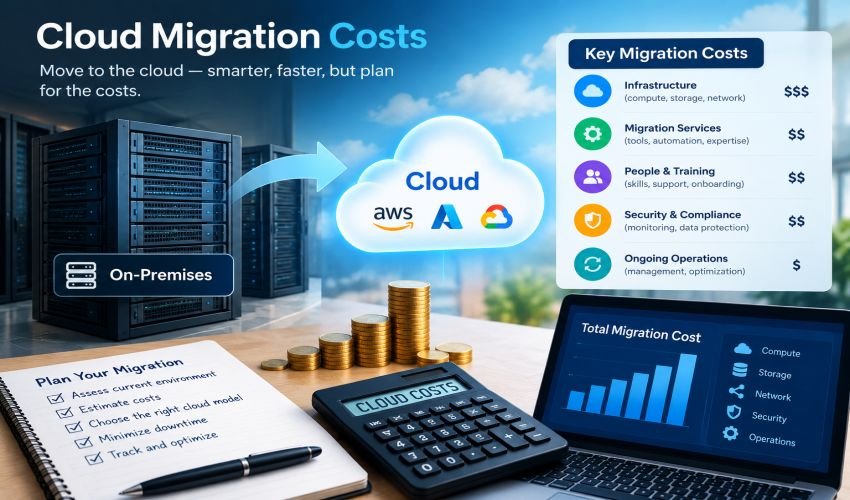

For the better part of a decade, the technology industry heavily promoted a singular narrative about digital transformation. The promise was simple: move your operations out of the physical server room, put everything in the cloud, and watch your IT budget shrink. Business leaders eagerly adopted this advice, shutting down local hardware and moving critical infrastructure to massive public data centers.
Years later, many of those same leaders are staring at their monthly billing statements in disbelief. Instead of reducing operational overhead, their IT costs have multiplied.
The hard truth is that the cloud is not inherently cheaper than local hardware. It is simply more flexible. Without strict financial governance, that flexibility quickly becomes a massive financial liability. Industry data published in the Flexera State of the Cloud Report indicates that managing cloud spend remains the absolute top challenge for modern organizations, with an estimated 29 percent of total cloud budgets completely wasted on idle or over-provisioned resources. If you want to realize the economic benefits of digital transformation, you have to understand exactly where those hidden expenses originate.
The Financial Trap of Lift and Shift Migrations
The single most expensive mistake a company can make is attempting a “lift and shift” migration. This happens when an organization takes their exact on-premise server configurations and replicates them identically in a cloud environment.
When you purchase a physical server for your office, you have to buy enough computing power to handle your absolute busiest day of the year. That server sits at 15 percent utilization most of the time, but you paid for the maximum capacity upfront. If you lift and shift that exact same specification into the cloud, you are now paying premium hourly rates for maximum capacity that you rarely ever use.
Cloud economics require a completely different approach to infrastructure planning. You should only pay for what you consume. This is exactly why bringing in an IT services expert in Mount Pleasant is a necessary step before executing a migration. A proper assessment ensures that your workloads are right-sized for a virtual environment rather than blindly copied over from legacy hardware.
The Threat of Unmonitored Cloud Sprawl
Physical hardware naturally limits unchecked spending. If an employee needs a new server, they have to request a budget, order the physical machine, wait for shipping, and have a technician plug it into the rack. That friction prevents accidental spending.
The cloud completely removes that friction. With a few clicks, any software developer with administrative access can spin up a massive database or provision a cluster of high-performance virtual machines. Problems arise when those testing environments are abandoned. A developer might finish testing a new application on a Friday afternoon and simply forget to turn the virtual server off. Because the cloud bills by the minute, that abandoned machine continues to drain the corporate budget all weekend and into the next month.
This phenomenon is known as cloud sprawl. As different departments build their own digital tools, the organization loses track of who owns which asset. Without automated policies designed to terminate idle resources, companies end up funding ghost servers that provide zero business value.
Data Egress and the Hidden Costs of Bandwidth
Cloud providers design their pricing models to encourage data hoarding. Uploading your company data into a public cloud environment is usually completely free. However, pulling that data out of the cloud and back to your local network triggers data egress fees.
Companies are routinely shocked by egress charges. If your workforce constantly downloads large media files from a cloud storage bucket, or if your local applications constantly query a cloud-hosted database, those bandwidth charges accumulate rapidly. Furthermore, transferring data between different geographic regions within the same cloud provider often incurs heavy routing penalties.
Controlling egress fees requires careful architectural mapping. You have to understand exactly how your data moves on a daily basis and position your computing resources as close to your data storage as possible to minimize transit costs.
Shifting Focus from Cost Cutting to Value Creation
If your only goal in moving to the cloud is to cut your IT budget, you will likely be disappointed. The true value of cloud computing lies in business agility.
A perfectly optimized cloud environment allows your company to launch new digital products faster. It allows you to automatically scale your resources during a busy holiday sales rush and scale them back down the moment the rush ends. It provides enterprise-grade disaster recovery capabilities that would be far too expensive to build independently.
Achieving this agility requires treating cloud migration as an ongoing operational discipline rather than a one-time IT project. It demands implementing strict financial tagging, setting up automated billing alerts, and holding department heads accountable for the resources they consume. When you stop treating the cloud like a magical cost-cutting tool and start treating it like a highly measurable utility, you can finally take control of your digital budget.