

The R1 RCM UiPath Press Release search topic brings together two important areas of healthcare technology: revenue cycle management (RCM) and robotic process automation (RPA). However, there is an important distinction: publicly available official announcements do not currently establish a joint R1 RCM and UiPath partnership or press release. Both companies have discussed automation and AI in healthcare, but their announcements should be examined separately. This article explains their roles, relevant developments, potential connections, and what healthcare organizations should understand.
Is There an Official R1 RCM and UiPath Partnership Announcement?
Based on the official company newsrooms reviewed for this article, I could not verify a joint press release announcing a partnership between R1 and UiPath.
This distinction matters because both companies have introduced healthcare automation solutions, but separate announcements do not establish a business relationship.
Their official announcements provide useful context:
- R1: Its announcements focus on healthcare revenue management, AI-powered automation, and its Phare OS platform.
- UiPath: Its announcements focus on business automation, AI agents, and technology that helps healthcare providers and payers manage administrative work.
Readers should use the original company announcements when checking partnership claims, product launches, or business agreements.
What Is R1 RCM and What Does It Do?
R1 provides revenue cycle management services and technology for healthcare organizations.
Revenue cycle management covers the financial activities involved in patient care. These activities begin when patients schedule appointments and continue through billing, claims, payments, and collections.
R1 aims to help healthcare providers improve these processes through technology, operational expertise, and automation.
Understanding R1’s Phare OS Platform
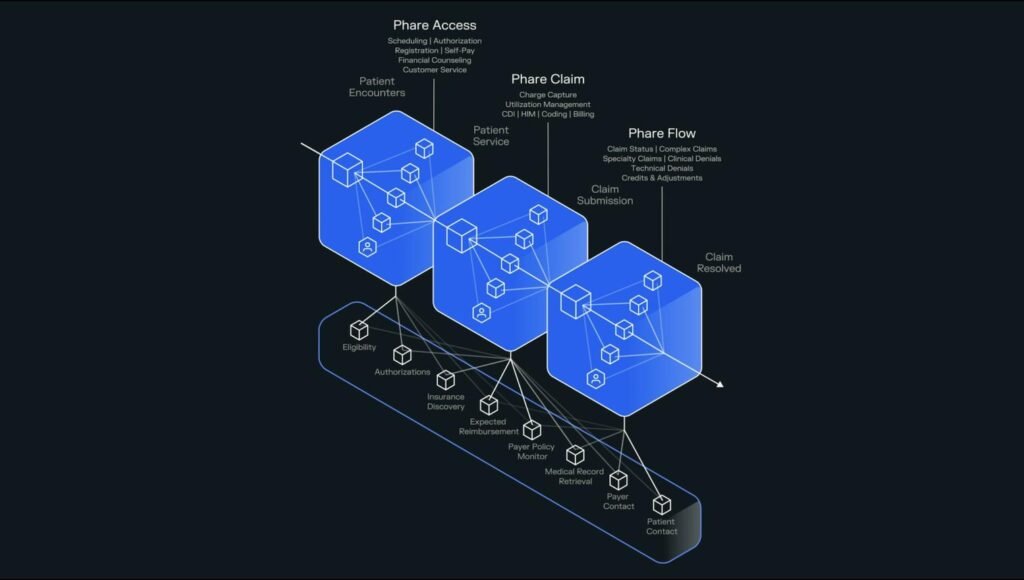
One of R1’s important technology developments is Phare OS, its healthcare revenue operating system.
R1 introduced Phare OS to connect different revenue cycle activities through shared intelligence and automation.
On November 12, 2026, R1 announced an expansion of Phare OS with six connected modules:
- Phare Auth: Supports prior authorization workflows.
- Phare UM: Supports utilization management.
- Phare CDI: Focuses on clinical documentation integrity.
- Phare Audit: Supports claim accuracy.
- Phare Denials: Helps manage claim denials and appeals.
- Phare Recovery: Focuses on post-payment revenue recovery.
According to R1, four modules are commercially available, while Phare CDI and Phare Recovery remain in early access with select customers.
The announcement also reported that Phare OS adoption spans more than $275 billion in net patient revenue. This represents the revenue associated with participating health systems, not revenue generated by R1. R1
What Is UiPath and How Does It Support Healthcare Automation?
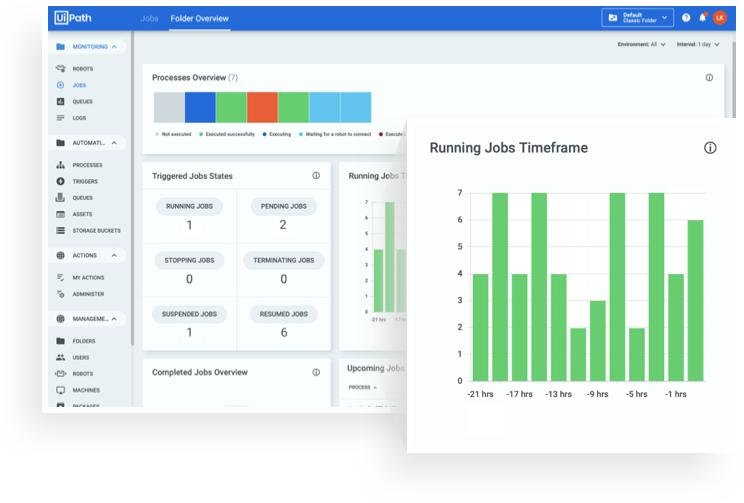
UiPath provides automation technology that helps organizations manage repetitive business processes.
Its platform combines robotic process automation (RPA), artificial intelligence, and workflow orchestration.
RPA uses software robots to perform repetitive computer-based tasks. These robots can interact with applications, transfer information, and follow defined business rules.
In healthcare, automation can support activities such as:
- Processing patient information.
- Checking insurance eligibility.
- Reviewing medical documents.
- Managing claim-related information.
- Supporting prior authorization.
- Identifying potential billing errors.
These applications can reduce manual work and help employees focus on tasks that require human judgment.
UiPath’s February 2026 Healthcare Announcement
On February 23, 2026, UiPath announced new agentic AI solutions for healthcare providers and payers at the ViVE 2026 conference.
The announcement introduced three main solution areas:
- Medical Records Summarization: Converts complex medical records into shorter, citation-backed summaries.
- Claim Denial Prevention and Resolution: Helps identify denial causes, initiate corrective actions, and support appeals.
- Prior Authorization: Automates parts of eligibility checks, clinical information mapping, and authorization workflows.
UiPath also highlighted its collaboration with Genzeon for its prior authorization solution.
These developments demonstrate UiPath’s interest in improving healthcare administration through AI and automation. However, the announcement does not establish a partnership with R1. UiPath+1
R1 RCM vs. UiPath: Key Differences
Although both companies address healthcare automation, their primary business models differ.
| Comparison | R1 | UiPath |
|---|---|---|
| Main focus | Healthcare revenue management | Enterprise automation |
| Core technology | Phare OS | UiPath Platform |
| Primary users | Healthcare providers | Businesses and healthcare organizations |
| Key activities | Billing, claims, denials, and reimbursement | Workflow automation and AI agents |
| Main objective | Improve revenue cycle performance | Automate complex business processes |
R1 focuses on healthcare financial operations, while UiPath provides automation technology for different industries.
Their capabilities address related business challenges, but they should not be treated as identical products.
How Could RPA and AI Improve Revenue Cycle Management?
Revenue cycle management involves many repetitive administrative tasks. Manual processes can create delays, increase errors, and make it harder to manage large volumes of claims.
RPA and AI can help address these challenges.
Here are three practical examples:
1. Insurance Eligibility Verification
Automation tools can collect insurance information, check eligibility, and transfer relevant details into healthcare systems. This helps staff identify coverage issues earlier.
2. Claim Denial Management
AI-powered systems can help identify denial reasons, organize supporting documents, and prepare information for appeals. Employees can then review complex cases and make important decisions.
3. Prior Authorization Processing
Automation can collect required information, identify missing documents, and track authorization requests. This can reduce administrative delays and improve communication between healthcare providers and payers.
These examples describe potential applications of automation technology, not verified joint implementations by R1 and UiPath.
What Should Healthcare Organizations Consider?
Healthcare organizations should evaluate automation solutions based on their operational needs rather than company announcements alone.
Important considerations include:
- Data security: Protect patient information and restrict unauthorized access.
- System integration: Check whether automation tools work with existing EHR, billing, and insurance systems.
- Human oversight: Keep qualified employees involved in decisions that affect patient care and financial outcomes.
- Accuracy: Validate automated outputs before submitting claims or making important decisions.
- Compliance: Review applicable healthcare privacy, security, and regulatory requirements.
Organizations should also compare implementation costs, maintenance needs, and measurable business outcomes before selecting a solution.
Conclusion
The R1 RCM UiPath Press Release search topic highlights growing interest in AI, RPA, and healthcare revenue cycle automation. However, the available official announcements do not confirm a direct partnership between the two companies. R1 is expanding its Phare OS revenue management platform, while UiPath is developing AI-powered healthcare automation solutions. Understanding these separate developments helps readers evaluate their technologies without confusing independent announcements with a confirmed business relationship.
Frequently Asked Questions
1. Is there an official R1 RCM UiPath partnership?
I could not verify an official announcement confirming a partnership between R1 and UiPath. Their publicly available announcements describe separate healthcare automation developments.
2. What is R1 RCM known for?
R1 specializes in healthcare revenue cycle management. Its services and technology support activities such as billing, claims processing, reimbursement, and financial operations.
3. What does UiPath do in healthcare?
UiPath provides automation and AI technology for healthcare administration. Its solutions support medical records summarization, claim denial management, and prior authorization workflows.
4. What is Phare OS?
Phare OS is R1’s healthcare revenue operating system. It connects revenue cycle workflows through automation, clinical intelligence, and payer-related information.
5. Can RPA improve healthcare revenue cycle management?
Yes. RPA can automate repetitive activities such as data entry, document processing, and information transfers. When combined with AI and appropriate human oversight, it can support more efficient revenue cycle operations.