
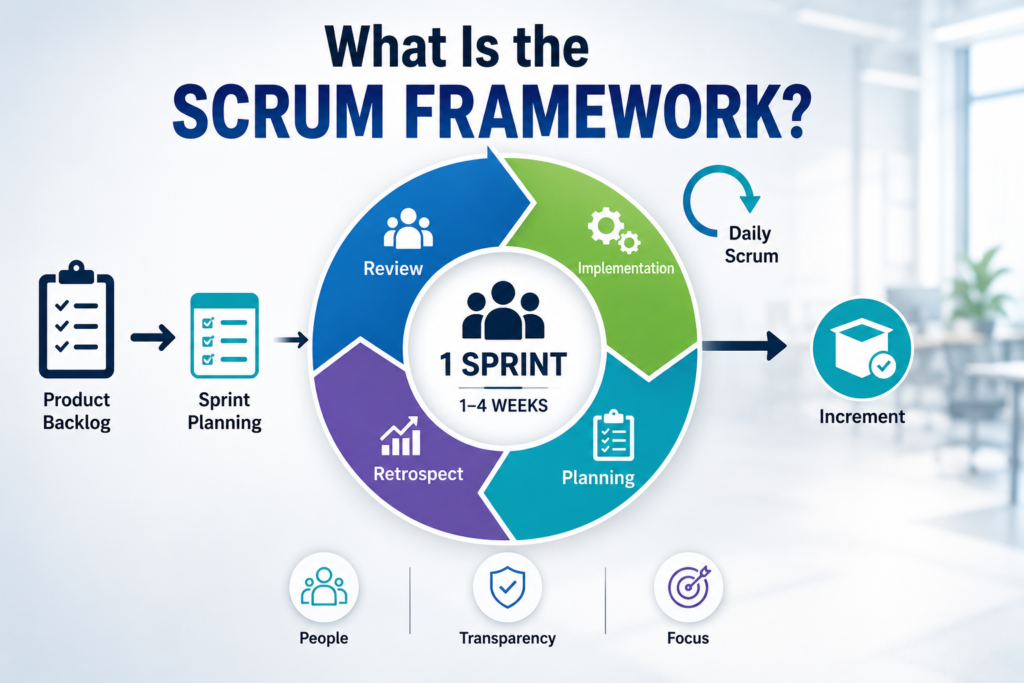

If you’re thinking what the Scrum framework really is, basically it’s a popular Agile framework that teams use so they can handle complicated work, boost collaboration, and ship useful products in a more efficient way. Scrum shows up a lot in software development, but honestly it can fit marketing too, education, product management, and a bunch of other industries as well.
What Is the Scrum Framework?
The Scrum framework is sort of a structured approach; it guides teams while they move through projects using short, intense development cycles called Sprints. Instead of finishing an entire project all at once, the group slices the effort into smaller bits, then delivers improvements step by step, like little releases of progress.
Scrum tends to push transparency, frequent feedback, strong teamwork, and ongoing refinement. Because of that, it becomes easier for the team to react to shifting customer wants and changing project requirements without losing the thread.
How Does Scrum Work?
Scrum arranges the work inside sprints, usually lasting between one and four weeks. Before a sprint starts, the team pulls items from the product backlog during sprint planning and chooses what they’re going to focus on.
During the sprint, everyone works together to complete those selected tasks. They also do a quick daily scrum, where they talk about where things stand, what’s next, and any sticky problems coming up.
Then at the end of the sprint, the team runs a sprint review to show what got done and collect feedback. After that, the Sprint Retrospective helps them spot better habits, small tweaks, or improvements so the next sprint can go smoother.
Main Roles in Scrum
The Scrum framework is historically based on three major roles:
- Product Owner: Performs management of the whole product backlog to ensure maximum profitability.
- Scrum Master: Assists the team in understanding the Scrum framework and in removing any obstacles.
- Developers: Responsible for creating the product increment and working together to achieve the sprint goal.
Advantages of Scrum
Using the Scrum methodology has many advantages, such as
- Improved team collaboration,
- Quicker delivery,
- More transparency, and
- Better adaptability.
By frequently checking the progress and getting feedback from the stakeholders, a team can easily spot potential issues and take necessary corrective actions.
Final Thought
Understanding what Scrum is helps teams and businesses find a more flexible approach to handling complex tasks. By combining Sprints, specified roles, regular meetings, and continuous improvement, Scrum gives teams the opportunity to deliver products step by step while being responsive to changing requirements.
Frequently Asked Questions (FAQs)
What is the Scrum framework in simple words?
Scrum is an Agile framework that helps teams complete complex work through short, repeatable cycles called sprints.
Is Scrum only for software development?
No. Scrum can be used for many types of complex work, including product development, marketing, education, and research.
How long is a Scrum sprint?
A sprint is typically one month or less. Many teams use one- or two-week sprints.