
Whenever software is being developed, software build management is kind of necessary, you know? The whole thing is mainly about collecting the different assets that will end up in a software release. And it’s not only the gathering part, but it also includes building plus testing the system and then running all those automated tasks, one after another. A build manager will organize the software structure, freeze the software when it hits important milestones, make baselines for what will become the first version, and also create and keep maintaining the process rules and folder templates.
Now, if you want the development cycle to be effective and also dependable, it helps to follow the right steps. So here are some good practices you should really consider for software build management.
Best Practices for Software Build Management
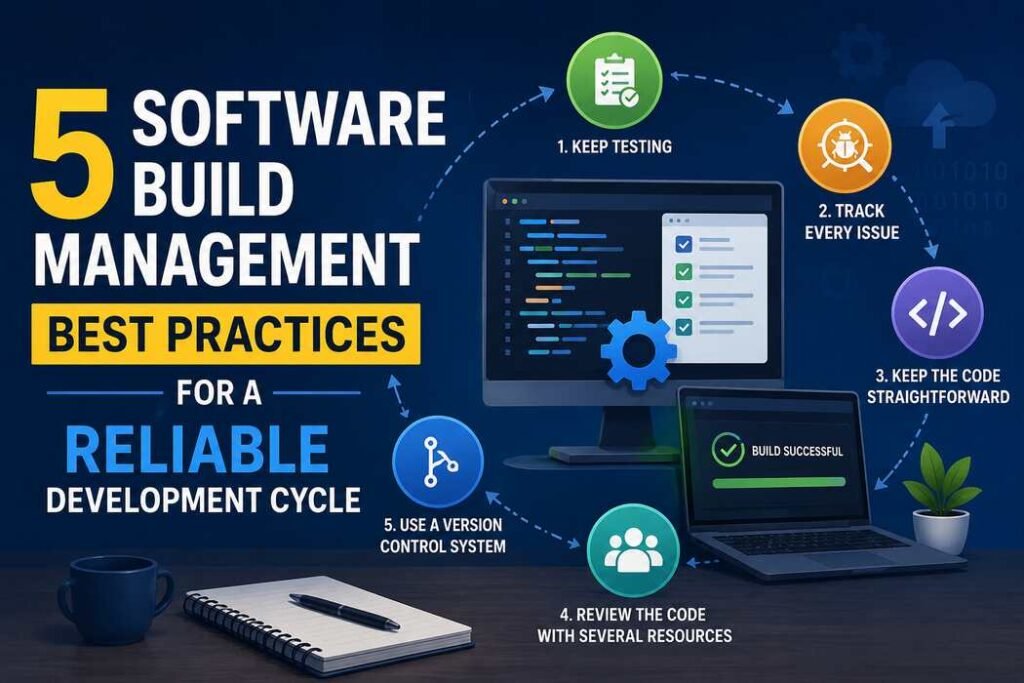
1. Keep Testing
Just because you tested the code once and it seemed fine, it doesn’t mean you should just stop. You should keep doing continuous tests so that the code still matches the users’ needs. In practice, these tests raise your code coverage, and they slowly increase your confidence in code quality over time.
2. Track every issue
A big part of software build management is error tracking. When you use a bug tracker, the whole thing feels easier, and it will also help you throughout the development process. With this kind of program, you can spot defects, then sort them by seriousness and by how many team members can actually focus on them. It also helps you organize tasks in a more orderly way and not just in a rushed manner.
3. Keep the Code straightforward
Keeping the code clean and sort of straightforward makes it simpler to read, and it can really improve developer collaboration. It’s usually easier to understand simple code, to detect defects inside it, and to adjust it later. So, don’t just assume that more complicated code will make life more convenient, because honestly, it may do the opposite, and only make things harder for you.
4. Review the Code with several resources
You shouldn’t tie yourself to just one resource. One crucial element of effective software build management is reviewing code with multiple resources. Developers should ask a different developer to review it, and this process should happen before the code is sent to the testing team.
This way, developers can exchange new skills and knowledge with each other, and they might even identify defects earlier. Overall, it supports the development process and keeps momentum.
5. Use a Version Control System
A version control system lets you manage updates to documents or code, basically. Developers can stay aware of any changes by tracking them in one place, and working together with other people becomes a bit less painful, not just easier. What’s also nice is that it means you can spin up new branches, do small repairs, or add new features without messing with the main codebase too much.
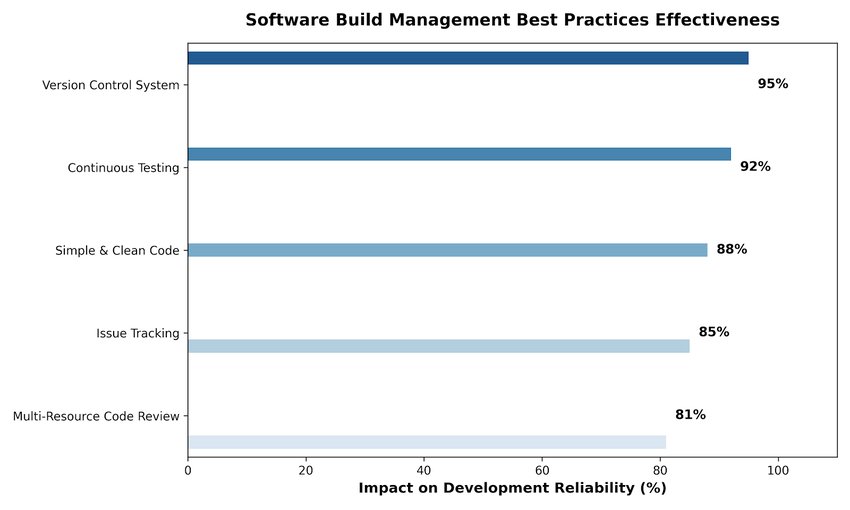
Software Build Management Best Practices Effectiveness
Explanation of the Graph Data
- Version Control System shows the highest impact because it helps developers manage changes safely and supports collaboration.
- Continuous Testing also has a very high impact since it improves code quality and catches bugs early.
- Simple & Clean Code improves readability and reduces future maintenance problems.
- Issue Tracking helps teams organize defects and solve problems efficiently.
- Multi-Resource Code Review improves collaboration and helps identify coding mistakes before testing.
This graph data is fully relevant to the article because it compares the importance and reliability impact of the five software build management best practices discussed in the content.
The Bottom Line
You really do need to look at your day-to-day practices as a developer if you want the software build management process to work smoothly. Review the practices in this article, and you’ll likely notice improvements right away, because the software will move toward its best possible version.
Frequently Asked Questions (FAQs)
What is a software build process?
A software build process is basically the act of converting your source code files into a standalone software artifact that can be executed on some computer, or at least the result of doing so. It usually includes version control, code quality analysis, compilation, and linking, depending on how the pipeline is configured.
What is the meaning of build management?
Build management refers to the process by which a company’s software product is assembled, tracked, and kept under control. It is more than just compiling it; it is coordinating the different steps so the outcome is consistent and not mysteriously broken later.
What are the 7 stages of software development?
The 7 stages of software development, collectively called the Software Development Life Cycle SDLC, give a structured route for taking a project from an initial idea toward completion. Those phases typically include planning, requirement analysis, design, coding, testing, deployment, and maintenance.