


In 2026, cybersecurity is no longer just an IT concern. It is a strategic business issue discussed at the highest levels of leadership. As organizations continue migrating infrastructure, applications, and data into cloud environments, Cloud Web Security has moved from being a technical safeguard to a board-level priority.
Executives now understand that a single breach can disrupt operations, damage brand trust, trigger regulatory penalties, and wipe out shareholder value. Cloud-first business models have expanded the digital attack surface, and threat actors are adapting faster than ever. Boards are no longer asking whether cloud security matters. They are asking how well prepared the organization truly is.
Let’s explore why Cloud Web Security has become a central concern in corporate governance in 2026.
The Rapid Growth of Cloud-Based Threats
The rise in cloud adoption has been accompanied by a sharp increase in cloud-related cyber incidents. Organizations rely on SaaS platforms, remote work tools, APIs, containerized workloads, and hybrid infrastructure. Each new integration point creates additional exposure.
The data clearly shows this upward trend.

Cloud-based cyber incidents have steadily increased year over year. Attackers are targeting misconfigured storage buckets, insecure APIs, weak identity management systems, and third-party integrations. Unlike traditional on-premise attacks, cloud threats often scale quickly and spread laterally across environments.
For boards, this trend signals one thing: risk exposure is growing faster than many organizations realize.
Financial Impact: From IT Issue to Enterprise Risk
Five years ago, a data breach might have been viewed as an operational failure. In 2026, it is seen as an enterprise-level financial event.
The cost of a major breach now includes:
- Regulatory fines
- Class-action lawsuits
- Operational downtime
- Ransom payments
- Customer churn
- Share price decline
- Long-term brand damage
Investors expect transparency and resilience. Institutional shareholders increasingly question leadership teams about cybersecurity preparedness during earnings calls and annual meetings.
This is where Cloud Web Security becomes central. Cloud infrastructure often supports customer portals, financial systems, internal collaboration tools, and product platforms. A disruption in the cloud can halt business operations globally within minutes.
Boards are responsible for safeguarding enterprise value. That responsibility now includes digital risk management.
Regulatory Pressure and Compliance Demands
Governments worldwide have tightened cybersecurity regulations. Data protection frameworks require strict controls around:
- Data encryption
- Access management
- Incident reporting timelines
- Third-party risk assessment
- Cross-border data transfers
Non-compliance can lead to substantial fines and reputational damage. Board members are personally accountable in some jurisdictions if governance failures lead to negligence.
As a result, Cloud Web Security strategies must align with legal and compliance frameworks. This includes continuous monitoring, documented controls, audit readiness, and incident response planning.
Directors now request detailed security reports, risk assessments, and performance metrics. Cybersecurity is part of governance dashboards alongside financial and operational KPIs.
The Shift in Budget Allocation
As risk increases, so does investment.
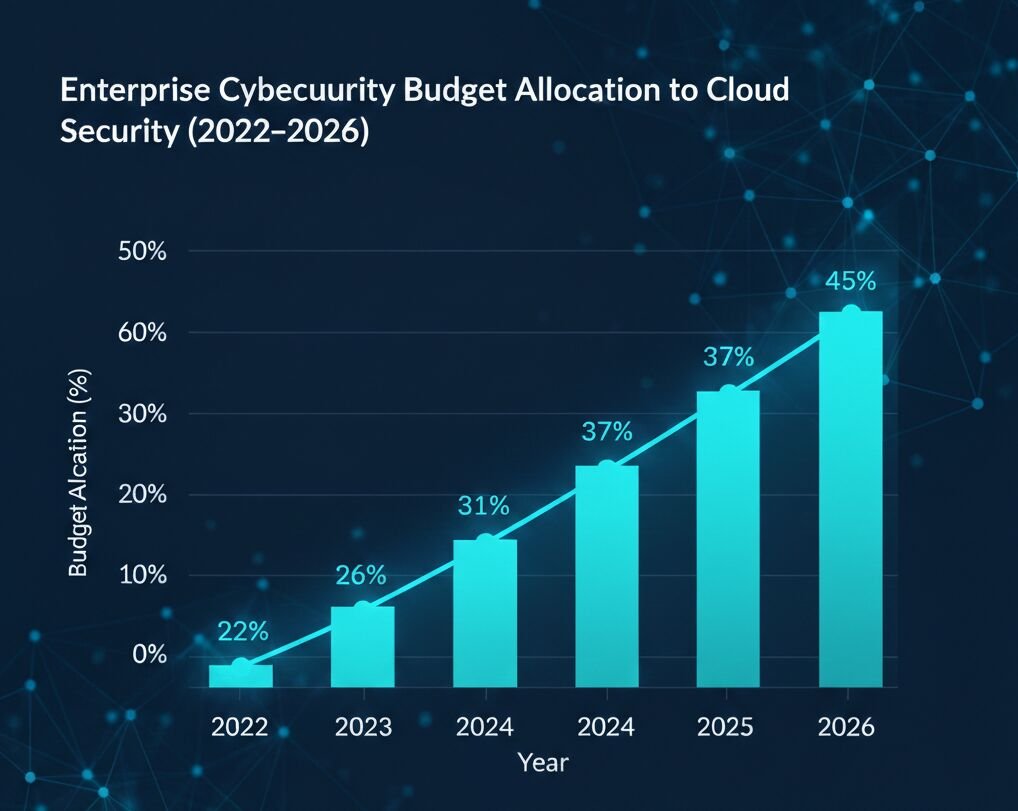
Organizations are allocating a growing percentage of cybersecurity budgets specifically to cloud-focused protection. In 2026, nearly half of enterprise cybersecurity spending in many industries is directed toward securing cloud workloads, applications, and infrastructure.
This budget shift reflects:
- Increased cloud dependency
- Greater threat sophistication
- Need for advanced monitoring tools
- Expansion of remote and hybrid work
- Growing compliance requirements
Board approval is required for major budget reallocations. That alone signals the strategic importance of Cloud Web Security.
Cloud Complexity and Shared Responsibility
One reason Cloud Web Security demands board attention is the complexity of shared responsibility models.
Cloud providers secure the infrastructure layer. However, organizations remain responsible for:
- Data protection
- Access control
- Configuration management
- Application security
- Identity governance
Many breaches occur due to misconfigurations or human error rather than direct provider failures. This shared model can create confusion about accountability.
Boards must ensure that:
- Responsibilities are clearly defined
- Security policies are enforced
- Continuous monitoring is in place
- Third-party risk is assessed
Without oversight, gaps emerge. And in cloud environments, small gaps can scale rapidly.
Reputation and Brand Trust
Brand reputation is one of the most valuable assets a company owns. In 2026, digital trust directly influences consumer behavior.
Customers expect:
- Secure transactions
- Data privacy
- Transparent policies
- Rapid breach notification
- Responsible handling of personal information
A cloud-based breach can go viral within hours. Social media accelerates public scrutiny. Trust erosion can take years to repair.
Boards understand that reputation risk is intertwined with Cloud Web Security performance. Protecting digital environments protects brand equity.
The Rise of AI-Driven Threats
Artificial intelligence has changed the cybersecurity landscape. Attackers now use AI to:
- Automate vulnerability scanning
- Craft sophisticated phishing campaigns
- Generate deepfake impersonations
- Exploit APIs at scale
- Bypass traditional detection systems
Cloud environments, with their dynamic scaling and distributed access points, become attractive targets for AI-enhanced attacks.
Organizations must respond with equally advanced defense mechanisms, including:
- AI-based anomaly detection
- Behavioral analytics
- Zero-trust architecture
- Continuous validation of user identity
These investments require executive sponsorship and board-level support. Cybersecurity decisions are no longer purely technical. They influence strategic roadmaps and capital allocation.
Third-Party and Supply Chain Risk
Modern businesses rely heavily on cloud-connected vendors and SaaS partners. Each integration expands the attack surface.
A vulnerability in a third-party provider can expose customer data even if internal systems are secure.
Boards now demand visibility into:
- Vendor risk management processes
- Security certifications
- Incident response coordination
- Contractual liability clauses
Cloud Web Security extends beyond internal infrastructure. It encompasses the entire digital ecosystem.
Operational Resilience and Business Continuity
Downtime in cloud environments can paralyze operations. E-commerce platforms, financial services, healthcare systems, and logistics networks depend on uninterrupted cloud access.
Business continuity planning now includes:
- Multi-cloud redundancy
- Backup and disaster recovery testing
- Failover strategies
- Real-time threat detection
Boards require assurance that the organization can withstand disruptions. Resilience planning has become a key governance issue.
Investor Expectations and ESG Reporting
Cybersecurity increasingly appears in environmental, social, and governance reporting frameworks. Investors evaluate digital risk management as part of overall governance quality.
Companies that demonstrate strong Cloud Web Security frameworks often:
- Inspire greater investor confidence
- Reduce perceived risk premiums
- Attract institutional capital
- Enhance long-term valuation stability
Board members understand that cybersecurity maturity influences market perception.
Strategic Enablement, Not Just Protection
In 2026, cloud security is not only about preventing breaches. It is about enabling innovation.
Secure cloud environments allow organizations to:
- Launch digital products faster
- Expand globally
- Integrate AI solutions
- Deploy scalable services
- Collaborate across remote teams
When Cloud Web Security is robust, it becomes a competitive advantage. Companies can innovate confidently without fearing catastrophic vulnerabilities.
Boards increasingly view cybersecurity as a growth enabler rather than a cost center.
Building a Board-Level Cloud Security Strategy
To address this new reality, organizations are implementing structured governance frameworks.
Key steps include:
- Appointing a Chief Information Security Officer with direct board access.
- Establishing a cybersecurity oversight committee.
- Integrating risk metrics into quarterly reporting.
- Conducting regular third-party penetration testing.
- Performing scenario-based crisis simulations.
- Aligning security investments with strategic priorities.
These actions demonstrate maturity and accountability.
Culture and Leadership Accountability
Technology alone cannot solve cybersecurity risks. Culture matters.
Boards must ensure that:
- Security awareness training is mandatory.
- Employees understand phishing and social engineering risks.
- Leadership promotes accountability.
- Security is integrated into development pipelines.
Security-first cultures reduce human error, which remains a leading cause of cloud breaches.
The Bottom Line
Cloud adoption is accelerating. Digital transformation continues. Threat actors are more advanced and more persistent.
As the attack surface grows, so does enterprise exposure. In 2026, Cloud Web Security sits at the intersection of technology, finance, compliance, reputation, and strategy.
Boards are prioritizing it because:
- Financial risk is substantial.
- Regulatory scrutiny is increasing.
- Investor expectations are evolving.
- Brand trust depends on digital resilience.
- Cloud infrastructure underpins modern business models.
Cybersecurity is no longer a back-office concern. It is a governance imperative.
Organizations that treat Cloud Web Security as a strategic board-level issue are better positioned to innovate, grow, and protect stakeholder value in an increasingly digital world.
FAQs
1. Why is Cloud Web Security discussed at the board level?
Because cyber risks directly impact financial performance, brand reputation, regulatory compliance, and shareholder value.
2. How does cloud security differ from traditional cybersecurity?
Cloud environments operate under shared responsibility models and involve dynamic, distributed infrastructure that requires continuous monitoring.
3. What role does the board play in cybersecurity?
The board provides oversight, approves budgets, evaluates risk management frameworks, and ensures accountability.
4. How much are companies spending on cloud security?
Budget allocation toward cloud security has significantly increased, with many enterprises dedicating nearly half of their cybersecurity budgets to it.
5. Can strong cloud security improve business growth?
Yes. Secure cloud environments enable innovation, protect brand trust, and support global scalability.